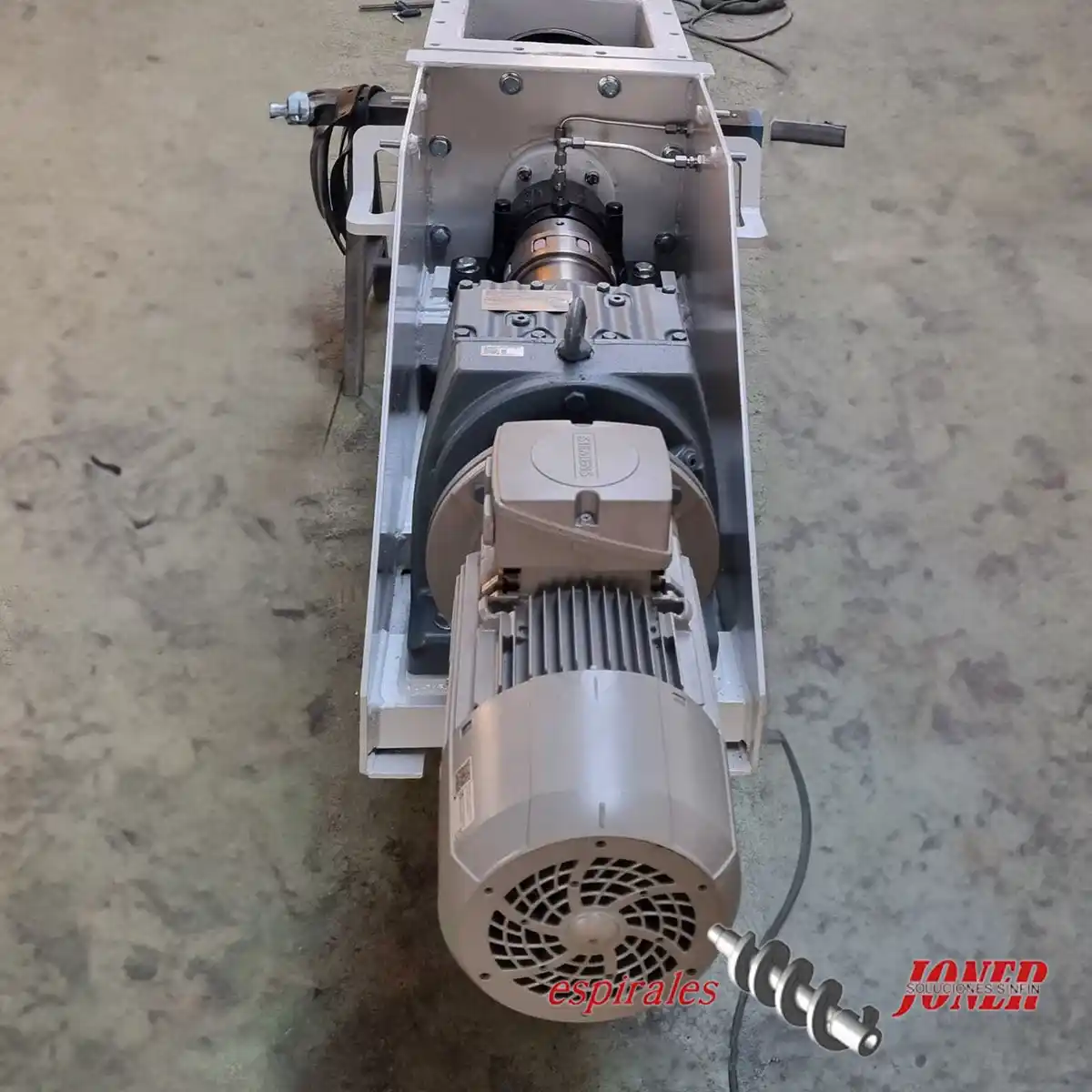
Conveyors
What are they?
The screw conveyor, also known as a screw conveyor, is one of the most reliable and cost-effective ways to convey bulk materials. It is a very versatile machine that can handle a wide variety of materials, from dry, free-flowing materials such as cement to wet, slow-moving materials such as dewatered biosolids.
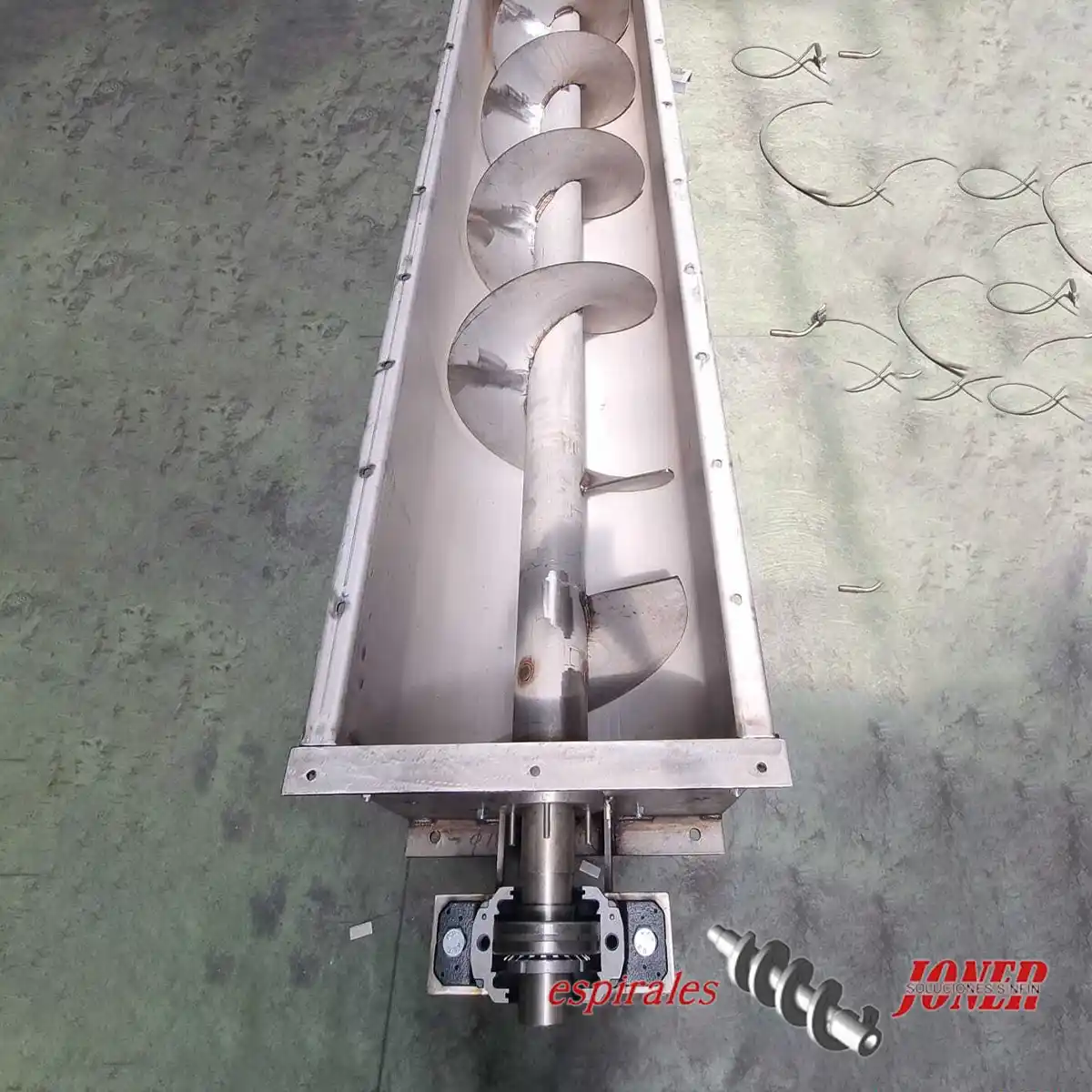
A screw conveyor or screw conveyor is a mechanism that uses a rotating screw blade, called a “Wing, Spiral, Blade or Helix”, usually inside a “U” shaped tube or trough, to move liquid, powder and granular materials.
Screw conveyors in modern industry are often used horizontally or with a slight incline as an efficient way to move semi-solid materials, including food waste, wood chips, aggregates, cereal grains, animal feed, boiler ash, meat and bone meal, municipal waste solids, and many others.
The first type of screw conveyor was the Archimedes screw.
Features
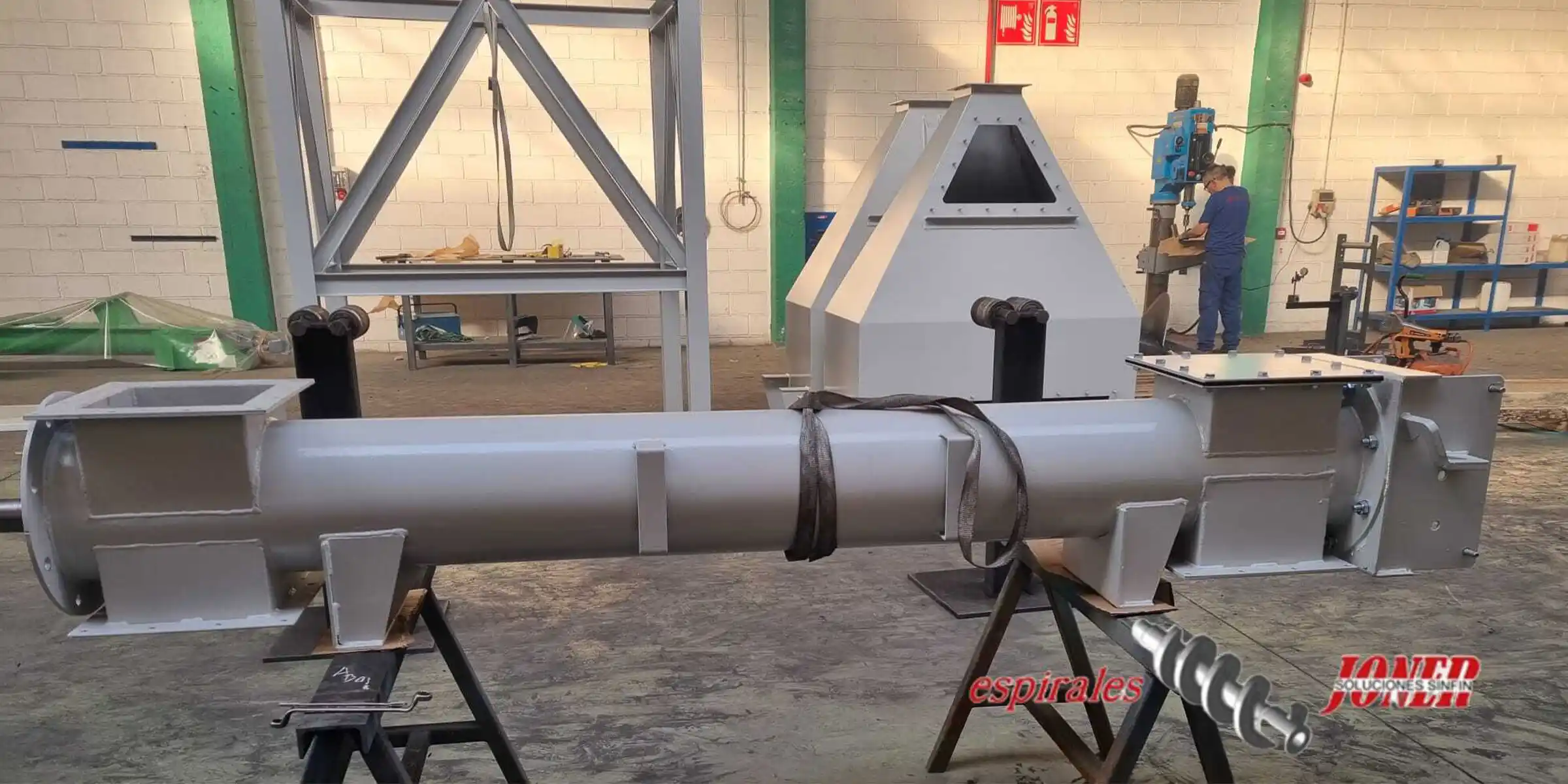
The tubular conveyors (TRT) are equipment with a casing made of a tube, where the auger is welded to a tube. Due to their closed tubular format, they allow greater working inclinations, even vertical.
They can transport any bulk product, allowing the transport of a larger quantity of material in a smaller diameter of the equipment.
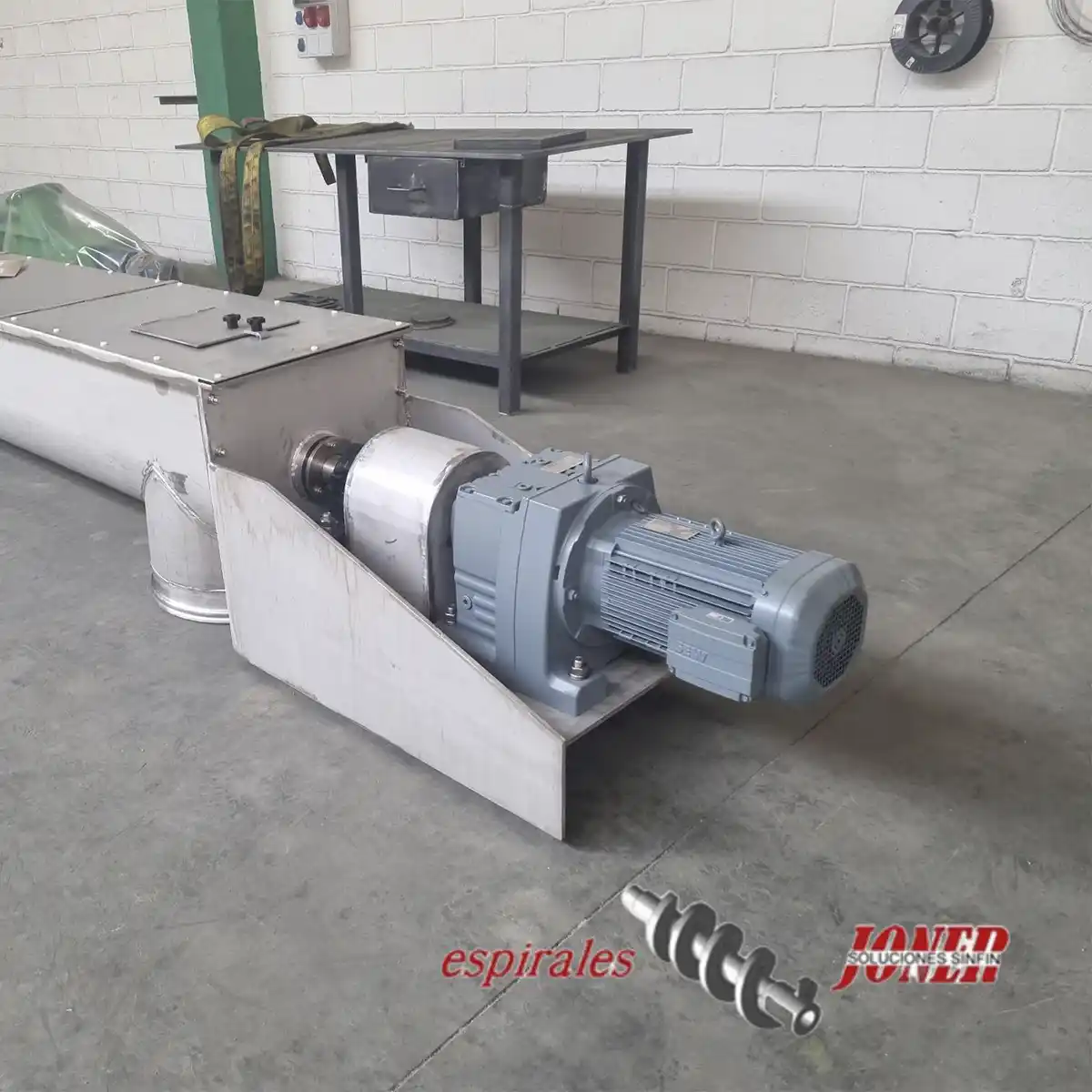
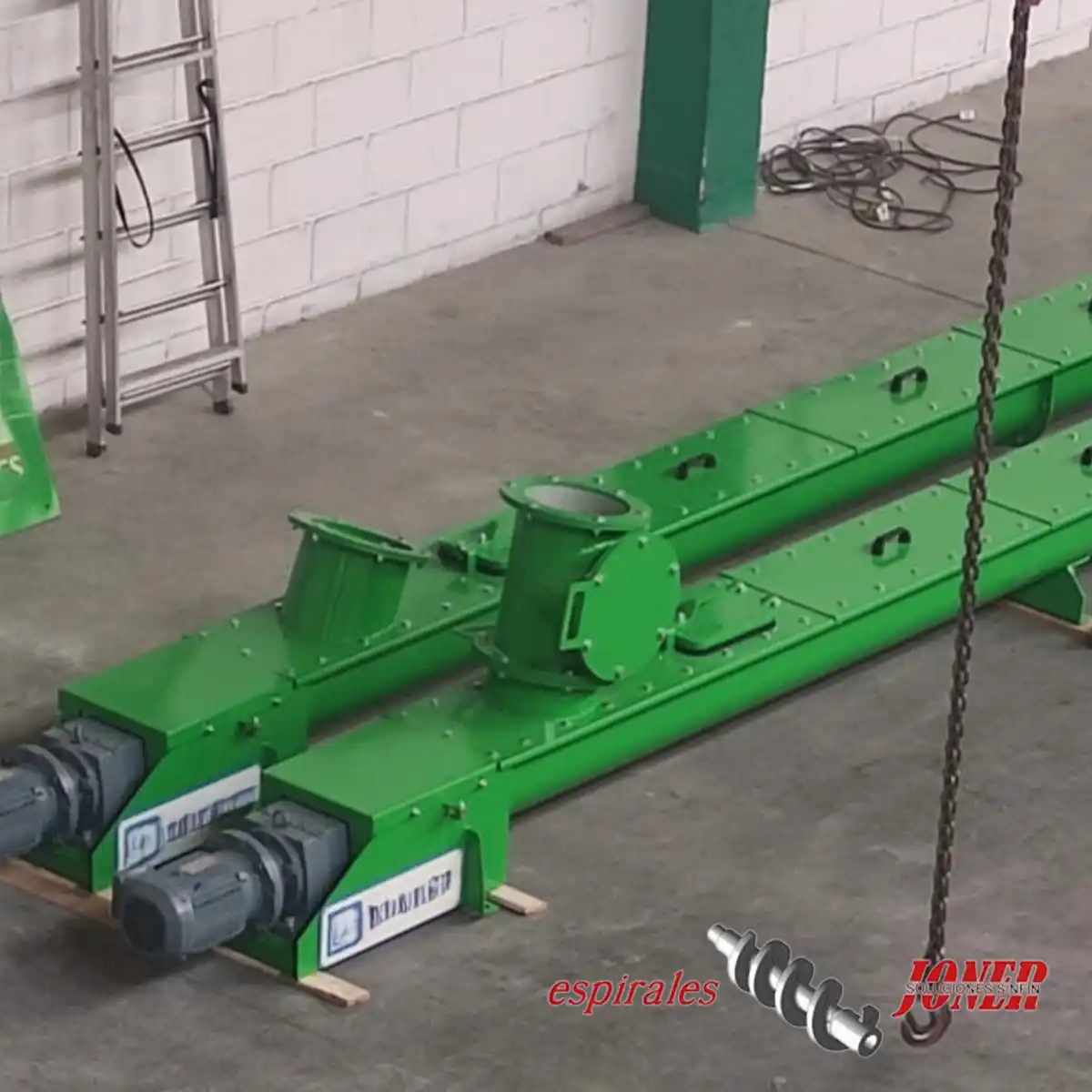
The “U” shaped channel conveyors are equipment with a U-shaped casing and screwed covers, where the auger or helical thread is welded to a tube or inner shaft. They convey any bulk product, being the ideal solution for moving abrasive materials.
Bedded conveyors are equipment with a U-shaped trough and bolted covers, but the auger is manufactured without an inner shaft and high thickness. They are used to handle sticky and wet materials that are difficult to convey.
This design allows higher trough loads, handled at lower shaft speeds.
They have the advantage of eliminating the clogging and material build-up of conventional augers, minimizing maintenance costs.